Blackberries and raspberries are two of the most forgiving fruits you can plant in a Georgia backyard — one afternoon of work producing a harvest for fifteen years or more. Most of what goes wrong isn't the plant. It's spacing sized for a farm row instead of a fence line, a pH number with no explanation of what Georgia clay actually needs to hit it, and no mention at all of which named variety you're even free to propagate once it's established.
This is the backyard version — built around what actually works eight miles from the fountain in downtown Marietta: red clay underfoot, a quarter-acre lot, a fence line instead of a tractor aisle.
Pick Your Type Before You Pick a Variety
Brambles come in three growth habits, and the one you choose decides almost everything else — trellis or no trellis, how much room you need, how much pruning you'll do every year.
- Erect types — Ouachita, Navaho, Kiowa, Apache — stand on their own canes. No trellis required, though a light one helps keep a loaded cane off the ground. This is the right starting point for most small yards.
- Trailing types — Chester, most true vine blackberries, Dormanred raspberry — need a built trellis to keep sprawling canes off the ground and out of the lawn mower's path. They want more linear room than a hedgerow against a fence usually offers.
- Semi-erect and primocane types — Triple Crown, and fall-bearing raspberries like Heritage — split the difference, or skip the two-year cane cycle altogether and fruit the same year they grow.
For a backyard patch, erect thornless varieties solve more problems than they create: no trellis to engineer, no fighting thorns at harvest, and a plant that holds its shape along a property line instead of needing acreage to sprawl into.
Site and Soil — What Cobb County Clay Actually Needs
Give a bramble patch six to eight hours of direct sun and a soil pH between 6.0 and 6.5, and keep it off any spot that holds standing water after a hard rain — wet feet kill a bramble faster than almost anything else does.
Piedmont red clay makes that last part harder than it sounds. Clay here is mineral-rich but drains slowly, so a bramble's shallow root system can sit wet longer than it wants to. Tilling alone doesn't fix that — work two to three inches of compost or pine bark fines into the top eight to ten inches before you plant, not after, and if your spot is only marginally drained, mound the row four to six inches above grade rather than planting it flush. A $15 soil test through your county Extension office tells you exactly how much lime to add instead of guessing.
Backyard Spacing — You're Not Planting a Commercial Row
Commercial spacing runs rows twelve feet apart so equipment can pass between them. A backyard patch doesn't need the aisle — it needs a single, well-built hedgerow.
Backyard Hedgerow — Erect Thornless
Run a single hedgerow along a fence line or property edge. Fifteen erect thornless plants at three to four feet apart is a thirty-to-sixty-foot row — a real planting, not a token one — and it fits most suburban lots without eating the yard.
Planting Window and the First Year
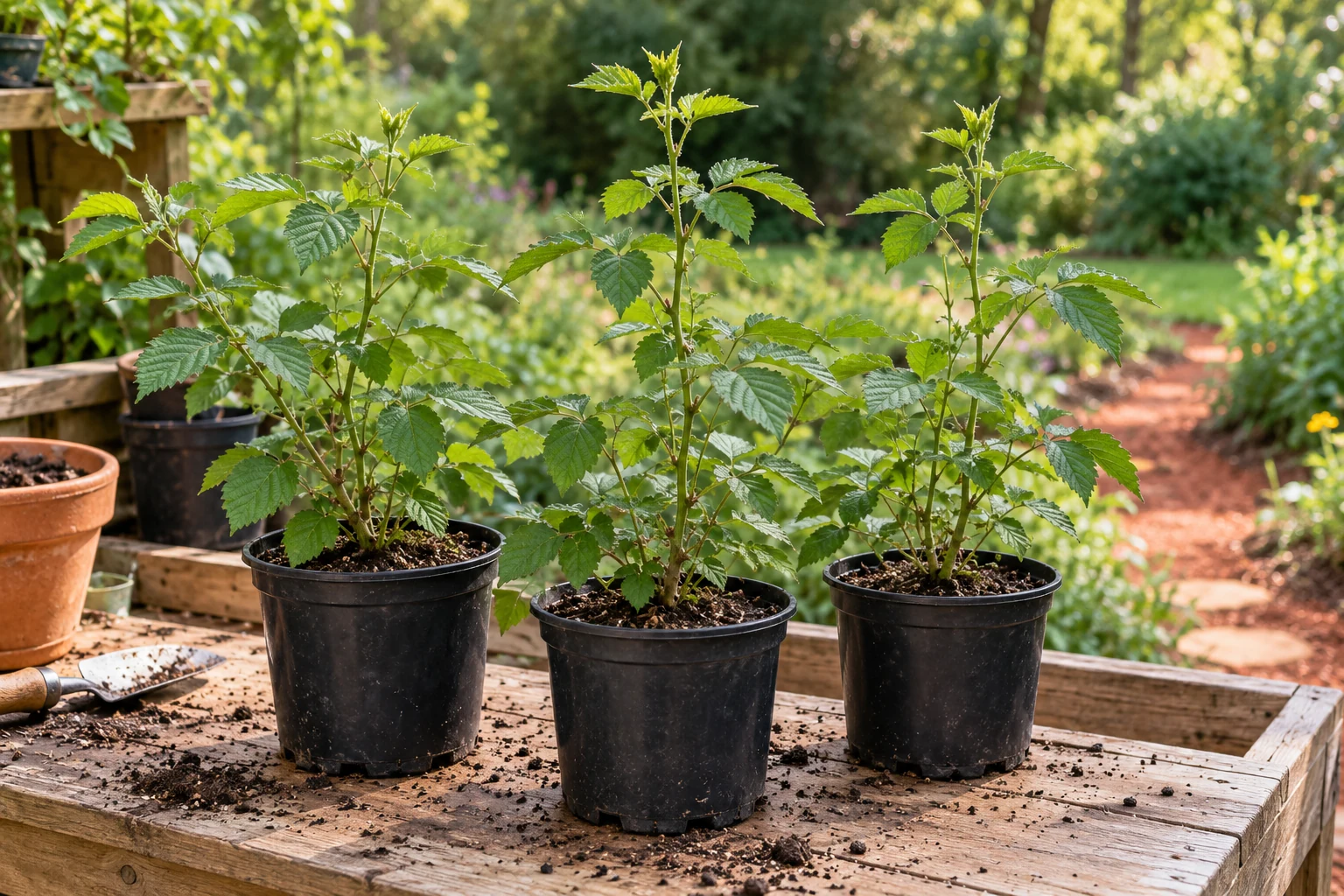
Plant dormant, bare-root or containerized stock between December and March, which lines up with Marietta's mild winters — the ground rarely freezes hard enough here to stop root establishment. Set the crown about half an inch below the soil line for trailing types, closer to two inches for erect plants and root cuttings, and mulch heavily right after planting. Hold off on fertilizer until after a good soaking rain has settled the soil around the roots.
Year one asks almost nothing of you. The canes that grow this season won't fruit — they're building the root system. Mulch, water during dry spells, and resist the urge to prune much of anything.
The Cane Cycle — Why Pruning Confuses Everyone
Here's the one concept that makes every pruning instruction make sense: a blackberry cane lives two years and acts like two different plants along the way.
Year one, it's a primocane — a green, vegetative shoot with no fruit. Year two, that same cane becomes a floricane — it flowers, fruits, and dies, while the roots have already pushed up next year's primocanes to repeat the cycle. (Primocane-fruiting types like Heritage raspberry break this rule and fruit on first-year wood — worth knowing if you want fruit sooner, at the cost of a lighter crop.)
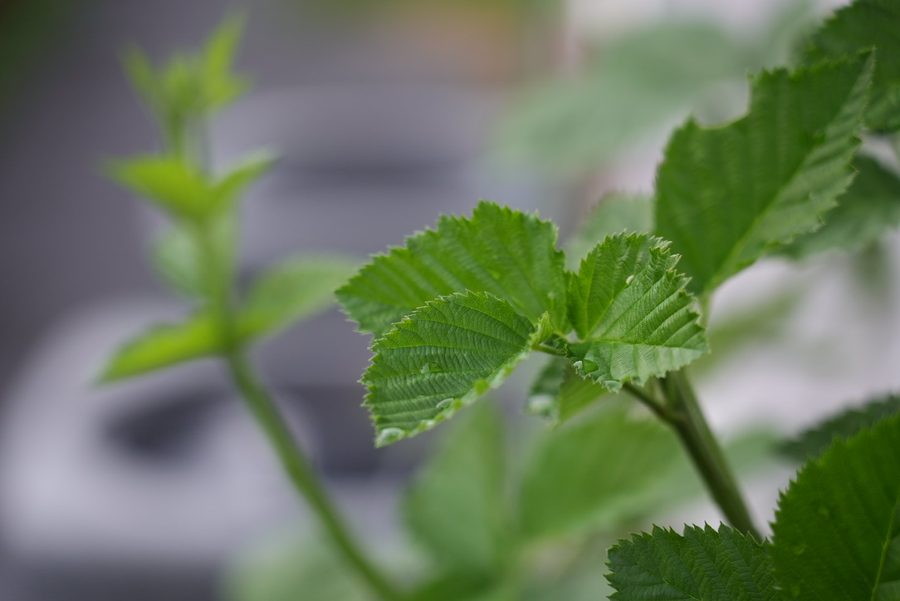
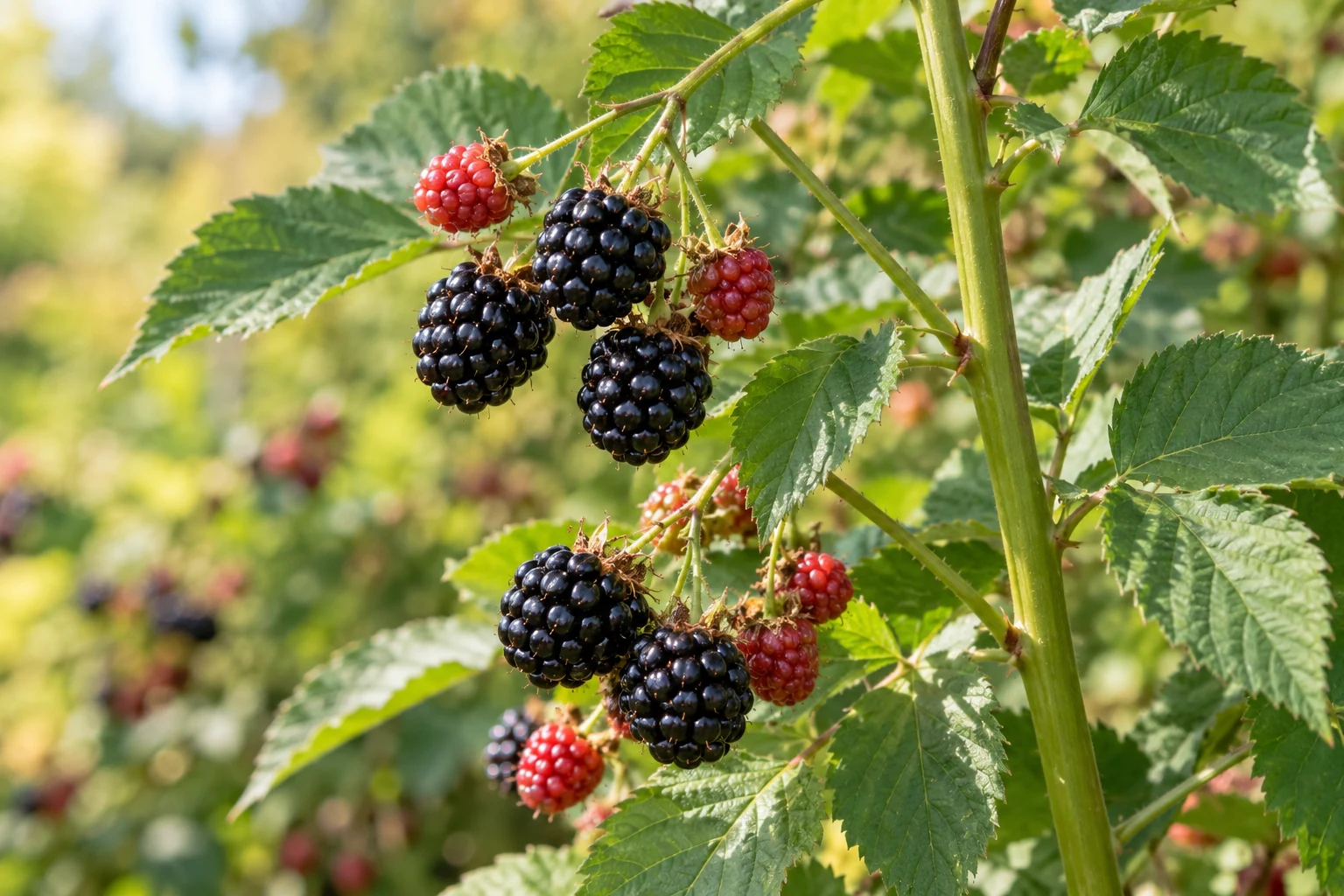
A primocane — this year's vegetative growth. It won't fruit until next season.
Pruning calendar for erect types
- Early summer, year two and beyond: Top primocanes at 40–42 inches to force lateral branching — more laterals now means more fruiting wood next year.
- Right after harvest: Cut dead floricanes to the ground. They're finished and won't produce again.
- Winter, dormant season: Shorten the laterals you forced in summer by one-third to one-half. This is also when you thin weak or crowded canes.
Trailing types and Dormanred raspberry follow a different rhythm. Leave the canes lying on the mulch through winter to limit cold damage, then tie them up to the trellis in late February before growth resumes.
Fertilizing on a Schedule, Not a Guess
Erect Blackberries, Banded Along the Row
Band it in a two-foot-wide strip rather than broadcasting it across the whole bed, and get a soil test every two to three years — clay holds nutrients differently than the sandy loam these figures were calibrated for, and a test will tell you if you're over- or under-shooting.
Which Recommended Varieties You Can Actually Propagate
This is the part most growing advice skips entirely, and it matters more than anything else on this page if you're buying plants instead of growing from someone else's stock.
Most of the best erect thornless blackberries released in the last twenty years came out of the University of Arkansas breeding program and are protected by an active U.S. plant patent. A patent holder controls who may propagate that variety for sale; a nursery needs a license to legally multiply and sell it, and a home gardener dividing a patented plant to give away or sell cuttings is technically infringing, whether anyone enforces it or not. Older releases and varieties whose 20-year patent term has run out are free to propagate by anyone.
| Variety | Habit | Propagation status |
|---|---|---|
| Ouachita | Erect, thornless | Patent expired — open |
| Navaho | Erect, thornless | Patent expired — open |
| Kiowa | Erect, thorny | Patent expired — open |
| Triple Crown | Semi-erect, thornless | Public ARS release — open |
| Natchez | Erect, thornless | Active (USPP20,891) — expires ~2028 |
| Osage | Erect, thornless | Active (USPP26,120) — expires 2033 |
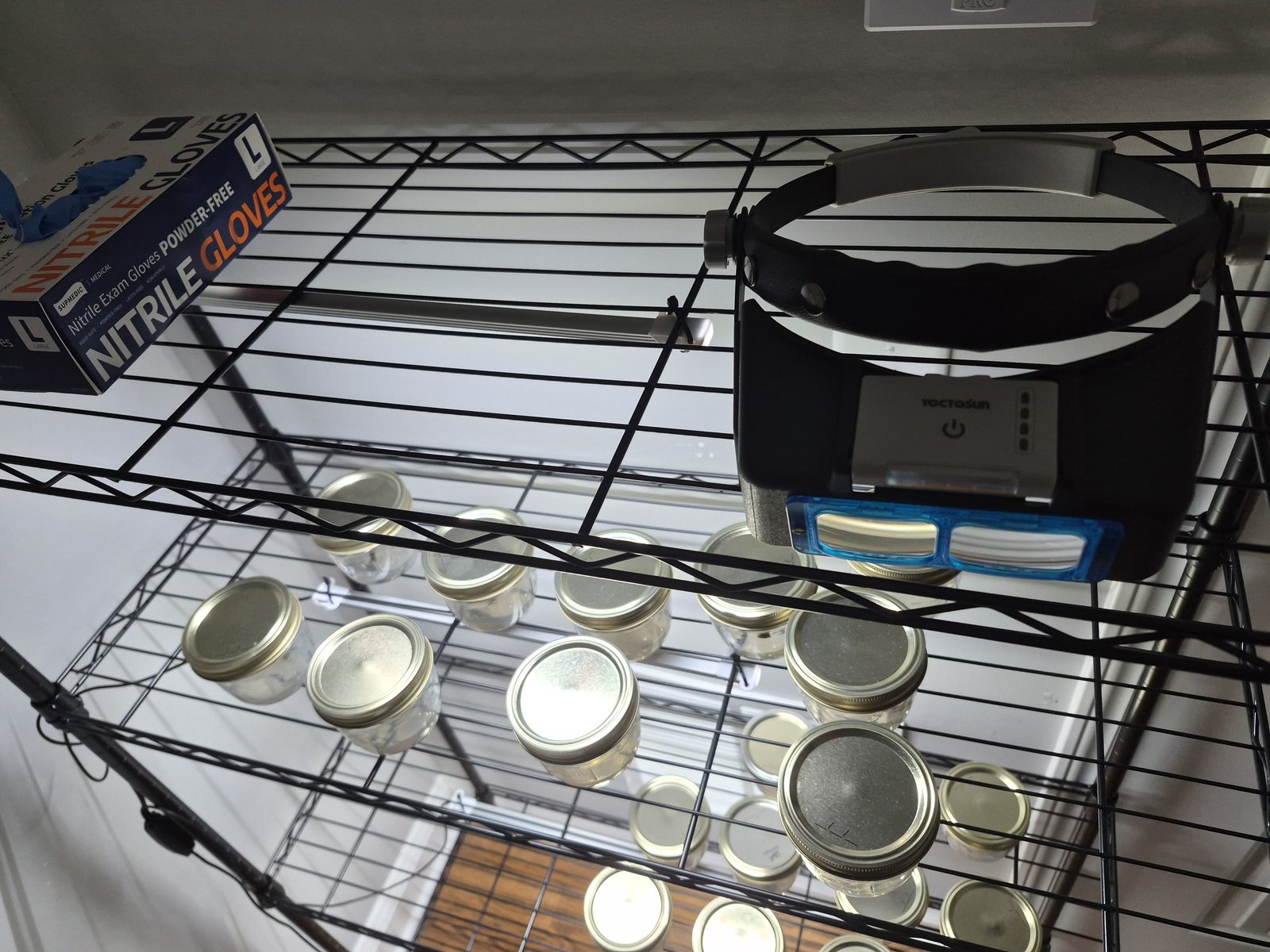
Verify current status with the USPTO before propagating anything for sale or trade — patent terms expire on fixed dates, and the list above reflects current status at the time of writing, not a permanent ruling. This is also the practical reason Steward Farms built its own tissue-culture program around Ouachita specifically: it's field-proven in Marietta's heat and humidity, it's thornless, and it's legally open to propagate in volume rather than licensed one plant at a time. You can read more about why Ouachita fits a backyard planting and how we propagate it clean, through tissue culture.
Diseases Worth Watching in Georgia Humidity
Two diseases account for most of the trouble a backyard grower actually sees in Georgia's humidity:
- Rosette (double blossom): The serious one here. Infected buds push out broom-like, malformed growth instead of fruit. Navaho and Arapaho carry resistance; sanitation — cutting out infected canes before bloom — is the main control where it shows up.
- Anthracnose: Purplish spots on young canes that enlarge and crack, sometimes killing the cane and withering developing fruit. Good airflow (proper spacing, not overcrowding) and removing infected wood keep it in check.
Buy clean stock. Start with tissue-cultured, virus-free plants rather than a cutting from a neighbor's patch of unknown health. A virus or a fungal infection established at planting never really leaves — it just gets handed to every cane the plant produces after. Starting clean is the one disease control you only have to do once.
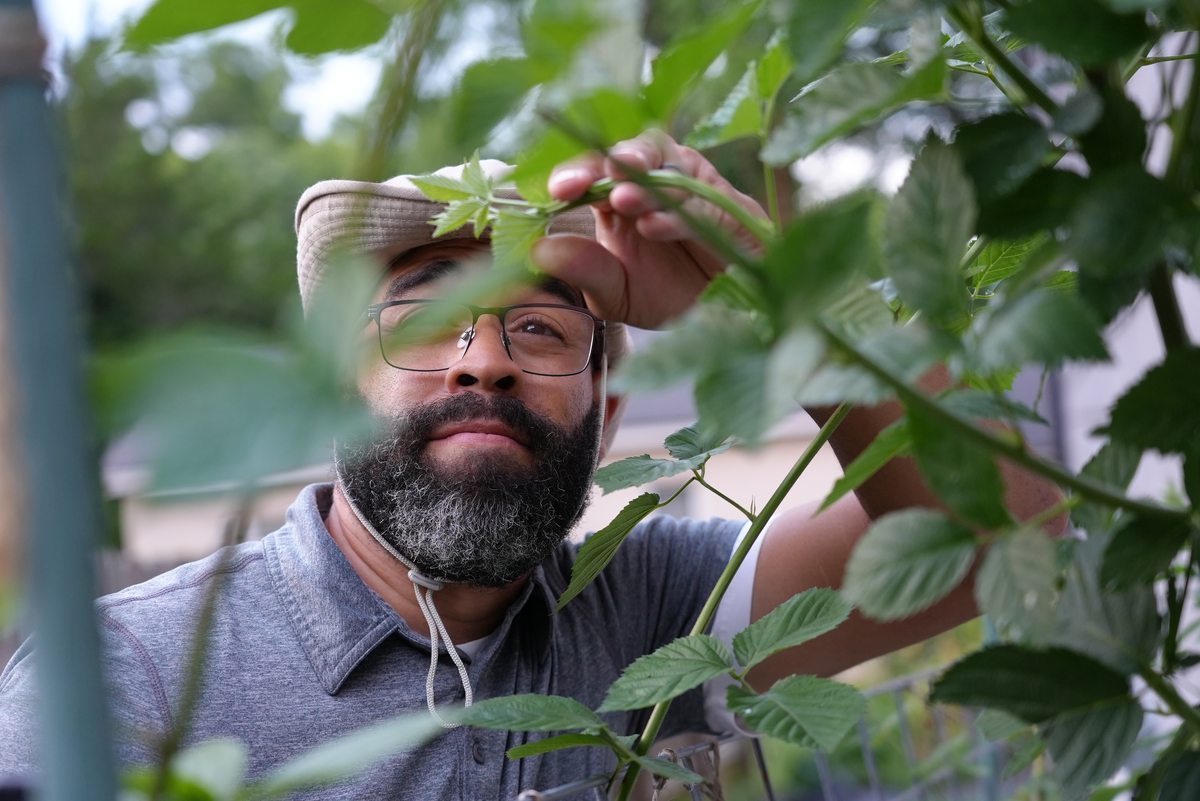
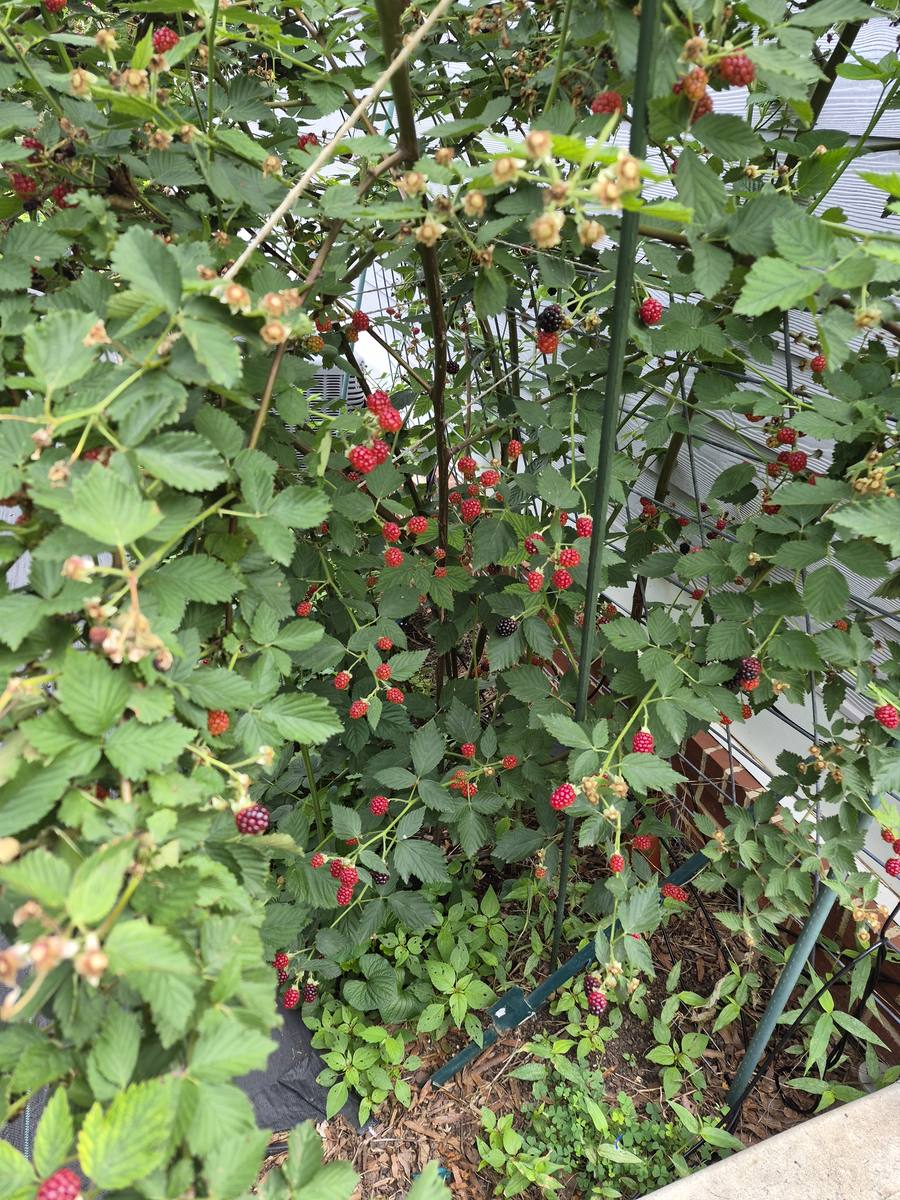
Checking cane health before the laterals get topped for the season.
When to Pick
Erect types typically begin fruiting in mid-June and continue into August around Marietta, a week or so ahead of north Georgia's mountain counties and a week or two behind the Coastal Plain. The visual cue matters more than the calendar date — a ripe blackberry loses its glossy shine and turns a soft, dull matte black. If it still looks glossy, it still has sugar left to make. We've written more about reading that exact moment on the vine.
A trellis height is just a number. It doesn't explain who decided a cane should live two years, fruit once, and hand its root system to the next one before it dies.
Someone Set the Cycle Before Anyone Wrote It Down
Strip away the pH numbers and the pruning calendar, and what's left is a plant that does something genuinely strange: it grows a cane for a full year that produces nothing, then spends its second year making fruit and dying on schedule, while handing the next season's growth to a replacement it already built. That's not a habit brambles stumbled into. It's a design, repeating the same way in every blackberry patch from the Coastal Plain to the mountains, long before anyone wrote it down.
"For by him all things were created, in heaven and on earth, visible and invisible… all things were created through him and for him. And he is before all things, and in him all things hold together."
Colossians 1:16–17Scientists measured the cycle and gave it a vocabulary — primocane, floricane, Rosette resistance, wire gauge. None of them put the cycle there. The pattern was already running in Genesis's garden: "Let the earth sprout vegetation, plants yielding seed, and fruit trees bearing fruit in which is their seed, each according to its kind" (Genesis 1:11) — seed carried inside the fruit, generation built into the plant from the start, thousands of years before anyone needed a trellis diagram to manage it.
Through Him. For Him. The agronomy above is real, tested, worth following. Jesus supplied the cane cycle underneath all of it, and He supplied it first.
Start Here
If you're planting this winter: get a soil test now, pick erect thornless over trailing unless you specifically want the trellis project, and buy clean, tissue-cultured stock of an open, legally propagable variety like Ouachita rather than an unlabeled cutting from a yard sale. Fifteen plants, three to four feet apart, along one sunny fence line is a real harvest by year two and a mature, fully producing row by year three.
Steward Farms grows pesticide-free, tissue-cultured Ouachita blackberries in Marietta, Georgia. Ask about plant availability or follow us on Facebook for the next harvest.
Sources
- United States Patent and Trademark Office — Patent Public Search, for current plant patent status before propagating any named variety for sale.
- North Carolina State University Extension and University of Arkansas System Division of Agriculture — public variety release records for Triple Crown, Ouachita, Navaho, and related Arkansas-bred cultivars.